Learning a Action Verbs List builds a strong base for writing clear English sentences. Action verbs show what a subject does. You’ll learn how to use them correctly through simple examples. Each example connects the verb to real situations. This helps you remember and use them naturally. Understanding action verbs stops common grammar mistakes. It’s a must if you want better grammar.
Table of Contents
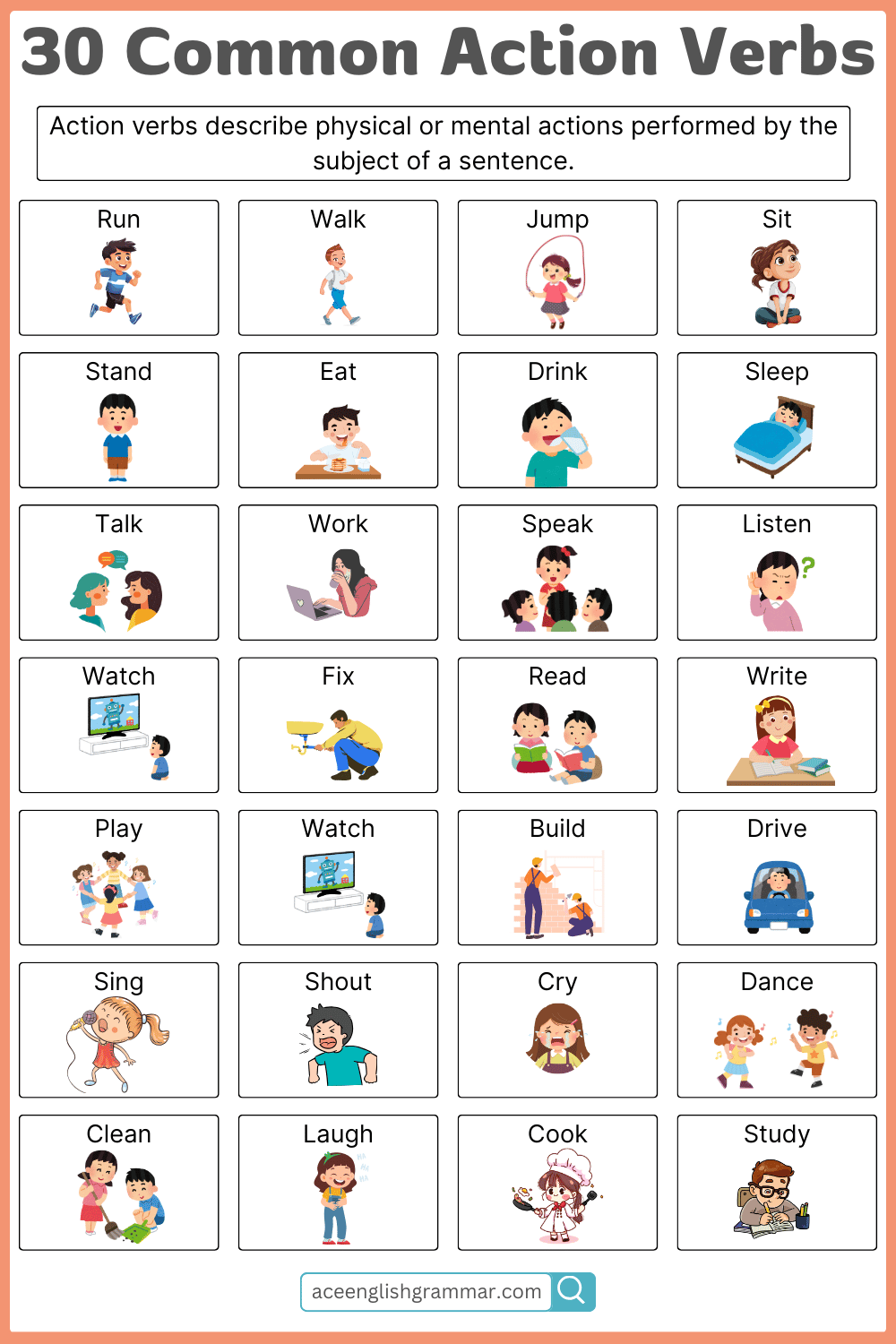
30 Most Common Action Verbs
- Run
- Walk
- Jump
- Sit
- Stand
- Eat
- Drink
- Sleep
- Talk
- Speak
- Listen
- Watch
- Read
- Write
- Play
- Work
- Study
- Help
- Laugh
- Cry
- Shout
- Sing
- Dance
- Drive
- Cook
- Clean
- Buy
- Sell
- Fix
- Build
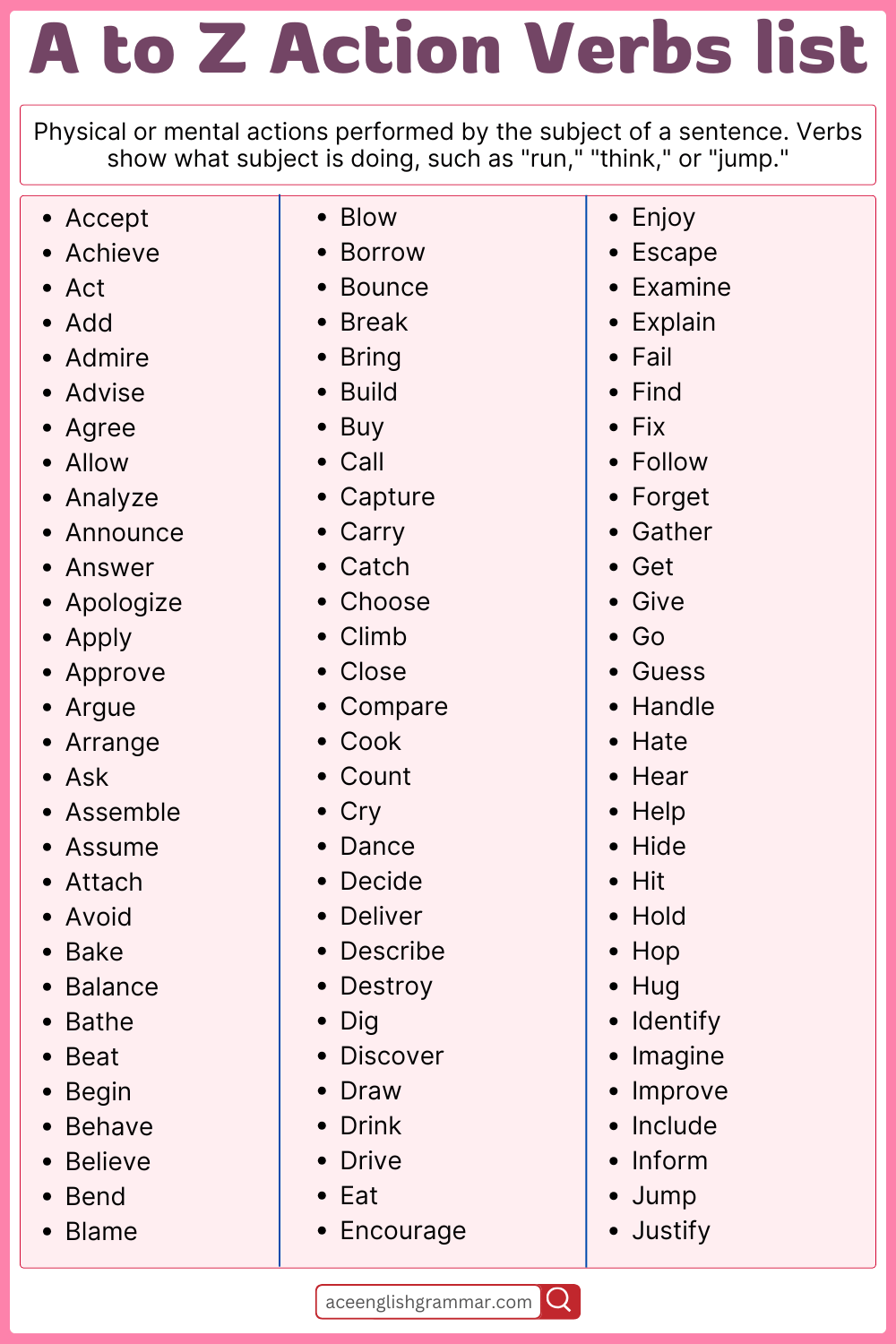
Action Verbs from A to Z in English
This section lists common action verbs from A to Z with simple examples. Use these verbs to describe what people or things do in everyday English.
- A: Ask, Arrive
- B: Bring, Build
- C: Catch, Create
- D: Dance, Drive
- E: Eat, Explore
- F: Find, Fix
- G: Give, Grow
- H: Help, Hug
- I: Imagine, Improve
- J: Jump, Join
- K: Keep, Kick
- L: Laugh, Listen
- M: Make, Move
- N: Notice, Name
- O: Open, Organize
- P: Play, Paint
- Q: Question, Quit
- R: Run, Read
- S: Sing, Sit
- T: Talk, Teach
- U: Use, Understand
- V: Visit, Vote
- W: Write, Watch
- X: Xerox, X-ray (‘X’ verbs are rare, so these are common examples)
- Y: Yell, Yawn
- Z: Zoom, Zigzag
Real-Life Examples of Action Verbs
- Amina reads a book every night.
- Hamza runs five kilometers daily.
- Fatima cooks delicious biryani.
- Yusuf writes poems in Urdu.
- Noor dances at weddings.
- Ali drives his taxi to the city.
- Mariam draws beautiful sketches.
- Bilal helps his sister with homework.
- Huda speaks fluent English.
- Imran sings in the mosque choir.
- Zainab watches cartoons on weekends.
- Salman cleans the house.
- Ayesha laughs at the joke.
- Iqbal solves math problems.
- Sana organizes her study desk.
- Usman carries groceries.
- Habiba feeds the cat.
- Rehan fixes his bicycle.
- Nadia paints landscapes.
- Jamal studies every morning.
- Layla travels to Karachi monthly.
Animal Action Verbs List
- Bark – Dog vocalization
- Meow – Cat vocalization
- Roar – Lion vocalization
- Hiss – Snake or cat vocalization
- Fly – Birds moving through the air
- Swim – Fish moving in water
- Gallop – Horse running at full speed
- Crawl – Snakes or insects moving slowly on the ground
- Jump – Frogs or rabbits leaping into the air
- Chirp – Birds making a high-pitched sound
- Howl – Wolves or coyotes vocalizing loudly
- Slither – Snakes moving smoothly on the ground
- Trot – Horse moving at a moderate pace
- Scratch – Cats or dogs using their claws to scratch surfaces
- Pounce – Cats or other predators leaping on prey
- Growl – Bears or dogs producing a low, guttural sound
- Waddle – Penguins walking in a clumsy way
- Dig – Dogs, moles, or rabbits burrowing underground
- Graze – Cows or sheep eating grass
- Sting – Bees or wasps injecting venom through their stingers
FAQs
An action verb tells what the subject of a sentence does. It shows either a physical and mental action.
Two main types: physical action verbs (run, jump) and mental action verbs (Believe, understand).
No, some verbs like “is” and “seem” are linking verbs and don’t show action.
Yes, a sentence can contain multiple action verbs, like “He ran and jumped over the fence.”
Action verbs show what someone does; state verbs describe a condition or state, like “know” or “own.”
Read More
Read More